The purpose of surgical intervention is to eliminate a suppurative focus and to create the optimum conditions for wound healing. It should be noted that it is necessary to apply a differential approach to choosing this or that type of surgical intervention depending on the specific features of a pathological process in a given patient (M.I.Kuzin, V.M.Kostyuchonok, 1990; V.I.Struchkov, et al. 1984). The most crucial point of an operation is to decide how much inviable tissues should be excised and this depends on the concrete situation and the surgeon's experience and competence.
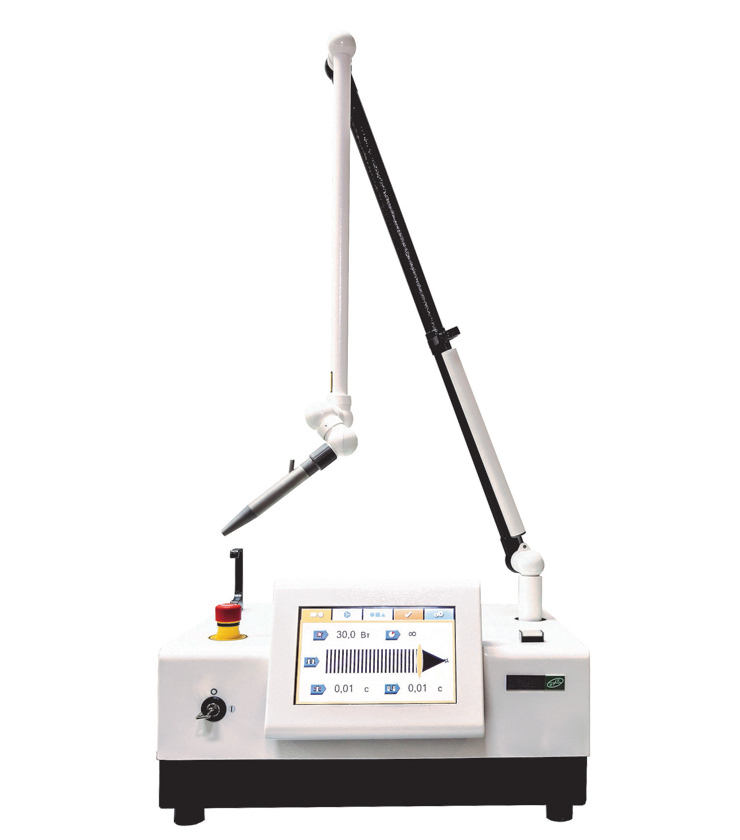
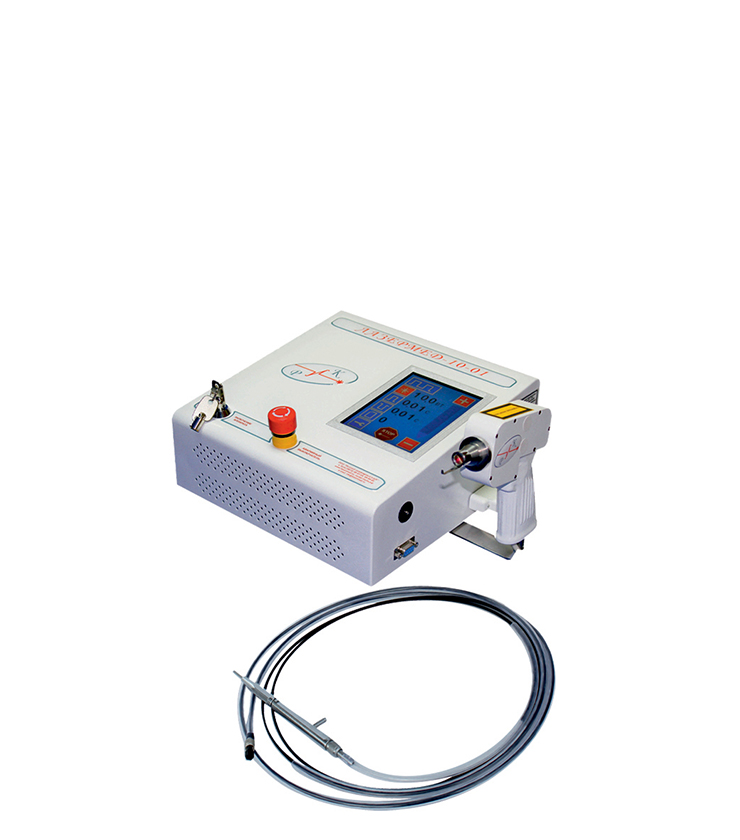
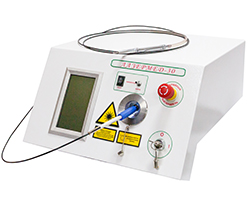
The use of a carbon-dioxide laser in the surgical treatment of purulent and burn wounds improves the quality and refines the debridement of a suppurative focus. The debridement of the wounds with high-energy CO2 laser radiation decreases the microbial dissemination of tissue, reduces the exudative phase of a wound process, activates the prolifera-tion of macrophageal and fibroblastic cell elements, the angio- and collageneses underlying the formation of granulati-on tissue, which causes a reduction in wound healing time.
To treat wounds, laser radiation is used in the following variants:
1. Vaporization of a pathological tissue within the limits of intact tissues. This procedure is used in nosological entities, such as furuncles, carbuncles, paronychias, acne conglobata, folliculitis, molluscum contagiosum, inflamed and suppurative papillomas, pointed condylomas, ony-chocryptosis. The application of laser radiation provides effective vaporization of abnormally changed tissues by minimally traumautizing the adjacent tissues, stimulates regeneration to form a fine elastic cicatrix in the shortest time.
To vaporize the abnormally changed tissues, the following parameters should be used: a pulsed mode, 20 W, 0.5-mm light spot or a beam defocused to 1.5 mm in diameter, a pulse duration of 0.5 to 1 sec, a pause duration of 0.05 sec. Effective tissue vaporization occurs at an energy power of over 1000 J/cm2; yet the shorter pulse is, the less thermal tissue injuryis ; the highest thermal tissue damage is observed with the continuous mode due to the heating of the adjacent tissues.
The laser beam is directed transversely to the pathological focus which is gradually vaporized. To do so, tiny abscesses frequently open particularly in furuncles, carbuncles, and acne conglobata, the resultant detritus screens the adjacent tissues from laser radiation to give rise to a carbonized crust. So the opened cavity should be washed with hydrogen peroxide solution and drained. The coagulated blood also highly absorbs laser radiation to form a carbonized crust as a carbon deposit which should be also removed with a wet drape. On tissue vaporization, the laser beam is smoothly moved so that each consecutive light pulse laps a third over the preceding one, giving rise to a groove uniform in depth. The magnitude of vaporization in the abnormally changed tissues is visualized after the washing of the wound surface with hydrogen peroxide solution and its drainage. After vaporization of tissues, we have finally their light-dead surface which an aseptic bandage is applied to. Hereafter antiseptic bandages should be changed until the wound heals under the crust.
2. Radical excision of a suppurative focus withit the limits of normal tissues. This procedure may be used in the following diseases: ligature fistulas, suppurative atheromas, suppurative bursitis, inflamed ganglia, encapsulated foreign bodies, hidradenitis, furuncles, carbuncles, abscesses, sluggish wounds, focal necrosis, gynecomastia, decubitus ulcers, degrees IIIB-IV burns. The excision procedure in the limits of normal tissues involves the concurrent closure of the wound with primary sutures or early autodermatoplasty.
The application of carbon-dioxide laser enhances the quality of the operation due to the minimal tissue traumatization, wound surface sterilization, stimulated regeneration, reducing the incidence of impaired wound healing (O.K.Skobelkin et al., 1990; P.I.Tolstykh et al., 1991; V.A.Der-benev, 1991). The pulsed radiation, which includes: 20 W, a 0.5-mm light spot, a pulse duration of 0.5 sec, a pause duration of 0.05 sec or Medimplulse modes are indicated. At the early stage, the suppurative focus is punctured, the detritus is removed, then methylene blue solution is adminis-tered. Thereafter a scalpel is used to make two arched incisions in the skin, then the tissue are dissected with a laser beam. The latter is directed transversely to the dissec-tion line by smoothly moving and drawing out the removable focus. Healthy tissues are dissected more rapidly than the infiltrated ones. Large vessels are taken on the forceps and ligated. The whole suppurative focus cannot be removed en bloc in unlimited suppurative processes when a fistula or cavity extends beneath the fascia or between the muscles and into the body's cavities. Here the fistula is excised to the cavity or muscles, then the focus is exposed to laser radiation by the procedure described below in its three variants.
In degrees IIIB-IV burns, the crust is excised with a laser beam. If burn necrosis is large, it is divided with several parallel incisions into separate strips, each 4-7 cm wide, then each strip is dissected into squares. The skin square is gripped with a Kocher's clamp at its margin and, drawing out a graft, separated with a laser beam to obtain viable tissues. The operation is completed with aseptic bandage application and in 2-5 days autodermatoplasty is made. The use of laser excision of a burn crust shows 2-4-fold de-creases in blood loss, stimulates wound surface granulation, and reduces the time of preparation for autodermatoplasty.
3. Debridement of purulent wound. This procedure may be useful in the following processes: infected and purulent wounds of various genesis, abscesses, phlegmons, mastitis, carbuncles, lymphadenitis, hidradenitis, bursitis, suppurative hematoma, suppurative atheromas, panaritium, decubitus ulcers, periproctitis, frostbites, foot necrotic lesions.
Radical excision of a suppurative focus within the normal tissues can be made only in limited processes, in chronic ones in particular. It is impossible or not well advisable to make radical excision in inflammatory tissue infiltration. In thes cases, the suppurative focus is widely incised, pouches and congestions are opened with a scalpel and the purulent detritus is evacuated. The cavity is washed, retracted with hooks, and drained, then large portions of necrotic and pus-soaked tissues are excised with a scalpel and scissors to obtain a common cavity. Then laser radiation is made.
The use of a CO2 laser enhances the quality of debridement of a purulent wound. Laser radiation provides a 70% wound surface sterility and a reduction in the microbial dissemination of wound tissues, which is much lower than the critical level. CO2 laser radiation also shortens the exudative phase of inflammation, activates the proliferation of macrophageal and fibroblastic cell elements, angio- and collagenosis which underlie the formation of granulation tissue.
A continuous defocused laser beam (20 W, light spot, 1-2 mm in diameter) is first used to debride the whole wound surface, by smoothly moving the beam over the walls and the wound bottom. It should be noted that necrotic tissues are much more readily coagulated and vaporized than are normal tissues. This gives rise to a burn crust on the walls of and at bottom of the wound. The wound is washed with hydrogen peroxide solution and drained.
The first debridement is best conducted before a carbonized crust forms, then the latter is removed with hydrogen peroxide solution-soaked drapes, thereafter the viability of the remaining wound tissues is checked. The viable tissues are bright pink-coloured, they are juicy, readily bleeding. The inviable tissues are grey and dull; they should be reirradiated with the laser beam to have carbonization, being successively removed. Thus, the whole wound surface is irradiated to obtain viable tissues. The viable tissues are finished with a pulsed defocused laser beam (20 W, a 4-6-mm light spot, a pulse duration of 0.1-0.2 sec, a pause duration of 0.05 sec), the advisable energy density is 20-30 J/cm2. This laser radiation mode fails to yield a carbonized crust and produces stimulating and sterilizing effects on wound tissues to the greatest extent.
The operation is completed with the introduction of turundas containing antiseptic solutions. In adequate debridement, there is no or very scanty serous discharge from the wound on the following day . Exposure of wounds to CO2 laser radiation accelerates their granulation and epitheli-zation, normalizes microcirculation, and enhances wound resistance to microbial invasion, which permits secondary sutures to be earlier applied, namely on days 3-5 after surgery, reduces the incidence of complications and the time of wound healing.
Представительство в Москве


Представительство в Туле